
A report by the University of Chicago's Energy Policy Institute projects approximately 15,800 additional heat-related deaths in India over the next six months due to the 'super El Nino' phenomenon. Globally, nearly 451,000 additional deaths are anticipated. Experts in India emphasize the need for swift action, including implementing Heat Action Plans and focusing on vulnerable populations, while also urging caution regarding model-based projections.

If India's medal tally ultimately falls significantly short of Hangzhou, the conversation should not stop with the athletes or coaches. It should extend to a much more uncomfortable institutional question: After years of increased investment, programmes, infrastructure and policy attention, where exactly is the system failing to convert that investment into medals, champions and depth across sports? asks Jaydeep Ray.
Banaras Hindu University (BHU) has received approximately Rs 15 crore in funding from the Indian Council of Medical Research (ICMR) for six biomedical research projects. These projects aim to address critical national health priorities, including cancer detection, antimicrobial resistance, and pediatric septic shock, fostering advanced research and improving patient care.

Militants ambushed 14 Meitei men in Manipur on Monday, killing three and injuring three others. The attack, which occurred in the Sunurok hills, sparked widespread protests in Imphal, with locals placing bodies outside the Chief Minister's residence. Police used tear gas to disperse protesters. Chief Minister Y Khemchand Singh condemned the killings and held security review meetings, while the opposition Congress demanded his resignation, citing the state's ongoing ethnic violence since May 2023. Security forces have launched a combing operation with drones and sniffer dogs.

A century on, India has adopted the Left's welfare ideas, but not the Left. Why do people borrow the promises, then vote for the temple? questions Binu Alex.

The Sports Ministry conducted a review of India's Asian Games performance, scrutinising the lower-than-expected medal haul in athletics and badminton. Chaired by Sports Minister Mansukh Mandaviya, the meeting addressed issues like injured athletes and future planning for the 2028 Los Angeles Olympics, with a strong emphasis on federations delivering results and nurturing young talent.
Graphite electrode maker TACC has signed an initial agreement with the Institute for Functional Intelligent Materials to collaborate in the fields of advanced materials science, nanotechnology, and related disciplines.

A third-year BTech student at IIT Guwahati died after allegedly falling from the fifth floor of a hostel building, prompting a police investigation into the circumstances of his death.

rediffGURU Nayagam PP guides aspirants on how to pick the right career course and college based on their entrance scores and aptitude.

IIT Delhi has reconstituted the external probe panel investigating the death of an MSc Physics student, appointing retired Delhi High Court judge Mukta Gupta as its head. This decision follows the recusal of the previous chair, Ashok Kumar, and ongoing student protests on campus. The panel includes medical experts and student representatives to examine the circumstances of the alleged suicide.

Two IIT Gandhinagar students have developed "TrustGate," an AI-based cybersecurity system designed to protect critical infrastructure like water treatment plants and power grids. The system uniquely combines network traffic and physical sensor data to detect sophisticated cyber attacks, identify affected equipment, and provide real-time alerts to operators, earning them an international award.

The Kerala Crime Branch has arrested Raveendran Nair, former caretaker of Jayamadhavan Nair, for his murder nine years ago. The investigation, initially treated as an unnatural death, gained momentum through forensic evidence, contradictory statements, and a forged will, leading to the unravelling of a property dispute motive.

The scenes are same; placards, viral videos, riot, police but the grievances could hardly be more different, notes Abhay Jere, ex-Vice Chairman, AICTE.

'It is to observe the Sun continuously that you have the Aditya L1 mission.' 'It is in a position from where it can observe the Sun continuously.'

J R D Tata, chairman of the Tata group from 1938 to 1991, said that whenever he had to make a difficult decision, he would ask himself, what will be good for India, and what will be good for the Tatas. If he had a doubt, he would decide in favour of India. In the long run, it would turn out well for the Tatas too, he said, points out Arun Maira.

A report by Scholars at Risk, 'Free to Think 2026', states that academic freedom in India is "severely restricted" due to increasing government influence over higher education, university governance, and curbs on student expression. India is listed among six countries in this category, with its Academic Freedom Index score sharply declining. The report cites instances of faculty dismissals, event cancellations, and pressure on student protests, highlighting the alleged use of the UGC as a vehicle for state influence.

The Indian Institute of Science topped the HRD ministry's 2017 national rankings. In 2016, the IISc was ranked among the world's top 15 universities in the Times Higher Education University Rankings. In his book The Creation of Wealth: The Tatas from the 19th to the 21st Century, R M Lala recounted how Jamsetji Tata's grand vision and immense personal contribution laid the edifice of arguably India's finest educational institution.

Their message is blunt: Public scientific wealth should not be transferred at what they describe as 'throwaway prices'.capability, recruitment, promotional avenues and the voice of its employees.

Of the 37,448 candidates registered for the Foreign Medical Graduate Examination (FMGE) in June, 36,288 appeared and 4,635 qualified.
Researchers at BRIC-RGCB in Thiruvananthapuram have developed a novel nanopore-based sensing technology. This innovation allows for the early and highly sensitive detection of biomarkers associated with neurodegenerative diseases like Parkinson's and ALS, addressing a critical challenge in current diagnostic methods. The technology, published in Nature Nanotechnology, uses self-assembling dual-diameter nanopore sensors to identify disease-specific biomarkers even at low concentrations.
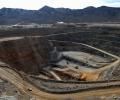
Union Mines Minister G Kishan Reddy announced that the Indian government is intensifying its support for private mining entrepreneurs seeking critical mineral opportunities abroad, working with the Ministry of External Affairs and appointing mineral officers in embassies to facilitate these efforts.

All five Indian teenagers who competed at the International Physics Olympiad 2026 won gold medals; thanks to their achievement, India shared the world No 1 ranking with China, Kazakhstan, Russia, South Korea and Taiwan.
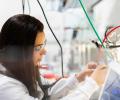
The Sports Authority of India (SAI), in collaboration with the Indian Council of Medical Research (ICMR), conducted a workshop on Good Clinical Practice (GCP) to strengthen ethical sports science research.
The Indian Institute of Technology, Delhi, has launched a comic-style brochure featuring Professor Padarth to make materials engineering more accessible and engaging for students and the general public.

'When a glacier collapse or a major flood event does occur, the water will simply reclaim its original path, and anything built in that path will be swept away.'
Karnataka Chief Minister D K Shivakumar met with AI major Anthropic to discuss a long-term partnership aimed at accelerating AI adoption across governance, education, healthcare, research, and the state's startup ecosystem. The collaboration focuses on deploying AI solutions responsibly, ensuring data privacy, and developing AI-focused skilling programmes and an AI University.
Uttar Pradesh Governor Anandiben Patel addressed AI Manthan 2.0, advocating for the comprehensive integration of Artificial Intelligence across all university subjects rather than as a standalone course. She urged universities to develop clear, time-bound AI roadmaps covering education, research, healthcare, and agriculture, emphasising indigenous AI development, employment creation, and the importance of "Safe and Trusted AI." The event also saw the formation of an AI Policy Advisory Group and an AI Implementation Group to drive these initiatives.

A top Swiss official has emphasised the growing importance of science and technology in international affairs, leading Switzerland to prioritise anticipatory science diplomacy in its foreign policy. Collaboration with India reflects a shared vision between two global innovation leaders.
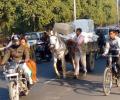
The Uttar Pradesh government is conducting large-scale training of crime scene experts at the Uttar Pradesh State Institute of Forensic Science (UPSIFS) to modernise policing and make it more result-oriented.

Indian quarter-miler Vishal TK, fresh from a historic season where he became the first Indian man to break the 45-second barrier in the 400m, is set to make his Commonwealth Games debut in Glasgow. The 22-year-old, a four-time national champion and a key member of India's relay teams, is confident of delivering a breakthrough performance, crediting his rigorous training at Inspire Institute of Sports and the support system for his preparation. He aims to continue raising the bar for Indian athletics on the global stage.
Odisha-based Serendipity Space successfully demonstrated drug crystallisation processes on a satellite prototype in a near-space mission. This breakthrough aims to enable pharmaceutical manufacturing in low Earth orbit, leveraging microgravity to create superior drug crystal structures for enhanced solubility, stability, and effectiveness. The mission tested core technologies, including an autonomous pharmaceutical factory, and was inspired by advancements made on the International Space Station.

Olympic medallist PV Sindhu has initiated the 'PV Sindhu Centre for Sports Excellence' in Visakhapatnam, with Andhra Pradesh IT Minister Nara Lokesh performing the groundbreaking. This integrated sports and education ecosystem aims to provide world-class coaching, sports science, and academic support across seven disciplines, establishing Visakhapatnam as a national sports hub.
Researchers at IIT Indore have developed a groundbreaking method to convert carbon dioxide and glycerol, two common waste materials, into valuable green chemicals like lactic acid and formic acid in just seven minutes. This low-energy process uses a specially designed ruthenium-based catalyst and microwave heating, offering a sustainable solution for waste management and green manufacturing.

There is no answer to the question of how IN-SPACe invited EOIs for ISRO's mature rockets and whether it was based on any government policy decision.
Researchers at IIT-ISM Dhanbad have been granted an Indian patent for an electrochemical reactor designed to recover copper from industrial wastewater. This innovative technology offers an environmentally sustainable solution for resource recovery and wastewater treatment, particularly benefiting the mining and metallurgical sectors.

The question for the next 20 years is not whether India can become a $5 trillion or $10 trillion economy. Those are attractive targets, but the real question is whether India can create enough productive jobs, educate its children properly, make its cities liveable, and give hundreds of millions of people a substantially better life, asserts Ramesh Menon.

India too can rise to the top if the 1.4 billion Indians back home are given better opportunities to use their innate talent and capacity to work hard, with right incentives in a more meritocratic rules-based system, asserts Ajay Chhibber.
A recent study by the Indian Institute of Science (IISc), Bengaluru, has identified self-fertilisation, or uniparental reproduction, as a critical trait enabling plants to become invasive. Researchers examined 28 species from the daisy family, finding that all 11 invasive species studied could reproduce uniparentally, unlike most native and non-invasive alien species. This ability allows a single plant to establish new populations, displacing local flora and altering ecosystems, highlighting the importance of reproductive strategy in weed-risk assessment.
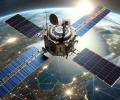
Nebex, founded by former Axiom Space executives, aims to build commercial infrastructure for the global space economy.
Professor Deepak Dhar of the International Centre for Theoretical Sciences (ICTS) has been awarded the prestigious 2026 Dirac Medal for his significant contributions to statistical mechanics and complex systems. He shares the honour with three other scientists for their pioneering work extending statistical mechanics into diverse fields like AI and theoretical neuroscience.
